
Learner Profiling form Deped free download
Complete Guide to Learner Profiling Form DepEd: Free Download & Implementation for K-12 Success
Introduction: Why Your School Needs a Learner Profiling Form DepEd
If you’re a teacher, school administrator, or educational coordinator working within the Philippine Department of Education system, you’ve likely encountered the learner profiling form DepEd. But do you truly understand its power and potential?
A learner profiling form DepEd is far more than just administrative paperwork. It’s a comprehensive data collection tool that creates a complete picture of each student—their background, learning needs, family circumstances, strengths, and challenges. When implemented effectively, this form becomes the foundation for personalized learning experiences that can transform student success rates.
This comprehensive guide walks you through everything you need to know about the learner profiling form DepEd, including how to complete it accurately, why each section matters, and how to leverage the data to create more effective teaching strategies.
Table of Contents
What Is a Learner Profiling Form DepEd?
Understanding the Basics
A learner profiling form DepEd is an official documentation tool used by public and private schools aligned with the K-12 Curriculum Framework. It serves as a comprehensive record that captures critical information about each student’s:
- Personal and demographic details
- Family background and socioeconomic status
- Learning preferences and strengths
- Health and nutritional information
- Academic history and performance
- Special needs or learning challenges
- Psychosocial factors affecting learning
The Purpose Behind Student Profiling
The primary purpose of a learner profiling form DepEd is to enable educators to:
- Personalize instruction based on individual student needs
- Identify at-risk learners early for intervention
- Tailor support systems appropriately
- Build stronger home-school partnerships with families
- Track student progress throughout the school year
- Inform data-driven decision-making at the school level
- Create inclusive learning environments that respect student diversity
Key Components of a Learner Profiling Form DepEd
Understanding each section of the form ensures you capture complete and accurate information. Here’s a detailed breakdown:
- Personal Information Section
This is the foundation of your learner profile. It includes:
Information | Why It Matters |
Full Name | Ensures proper identification and record-keeping |
Date of Birth | Determines age-appropriateness of activities; helps identify developmental concerns |
Age | Critical for assessing developmental milestones |
Gender | Supports inclusive classroom practices and monitoring of gender-based disparities |
Mother Tongue/Native Language | Guides MTB-MLE (Mother Tongue-Based Multilingual Education) implementation |
Religion | Helps respect cultural practices and plan inclusive celebrations |
Nationality | Important for legal documentation and enrollment compliance |
Pro Tip: Verify all personal information directly with parents during enrollment. Inaccuracies here can affect everything from correct age placement to appropriate language instruction.
- Address and Contact Information
Physical location data serves multiple critical purposes:
- Identifying transportation barriers that might affect attendance
- Understanding geographical challenges that impact learning
- Locating students during emergencies
- Planning home visits or community outreach
Include both permanent and current addresses. This matters especially for families who migrate seasonally or have unstable housing situations.
- Parental and Guardian Information
This section is absolutely crucial because family involvement directly correlates with student success.
What to Document:
- Names of both parents (or guardians if applicable)
- Contact phone numbers and email addresses
- Occupations of parents
- Educational attainment of parents
- Primary household contact person
- Guardian relationship to student (if not biological parent)
Why This Matters: Research consistently shows that parental involvement in education significantly improves student outcomes. Schools that maintain strong family connections through regular communication see better attendance rates, improved behavior, and higher academic achievement.
- Socioeconomic Status Information
While sensitive, this information helps schools provide appropriate support:
- Household income level
- Number of family members
- Employment status of parents
- Access to resources (electricity, internet, study space)
- Food security status
- Housing stability
Implementation Note: Approach this section with sensitivity. Frame questions as opportunities to identify support rather than invading privacy. Understanding socioeconomic factors helps schools connect families with scholarship programs, feeding programs, and other assistance.
- Educational Background
Document each student’s academic journey:
- Prior schooling (preschool, kindergarten attendance)
- Previous school name and address
- Academic performance records
- Grade retention history
- Subjects of strength and difficulty
- Previous interventions received
This section helps identify learning patterns and allows you to build upon previous instructional approaches.
- Learning Characteristics and Preferences
This is where the learner profiling form DepEd becomes truly transformative. Document:
- Learning style (visual, auditory, kinesthetic)
- Strengths and talents
- Areas needing improvement
- Behavior patterns
- Attention span and concentration levels
- Motivation factors
- Preferred learning environments
Understanding these preferences allows you to differentiate instruction and create a classroom where every student can thrive.
- Health and Nutritional Information
Physical well-being directly impacts learning. Include:
- Immunization status
- Chronic health conditions
- Allergies and dietary restrictions
- Vision and hearing status
- Nutritional concerns
- Medical emergencies to be aware of
- Current medications
Share to your friends!
Download Your Free Learner Profiling Form DepEd Template!
Good news! You can download your free, editable learner profiling form DepEd template right here, ready to use in your classroom. This template aligns with the Philippine K-12 curriculum standards and includes all essential sections discussed in this guide.
What’s Included in Your Free Download:
✓ Complete learner profiling form with all required sections ✓ Easy-to-follow layout suitable for printing ✓ Editable digital version (Word format) ✓ Customizable fields to match your school’s specific needs ✓ Clear instructions for each section ✓ Sample entries showing how to complete the form properly
Download Options Available:
- PDF Version: Print-ready format for immediate use
- Word Document: Fully editable version for customization
- Google Docs Link: Cloud-based access for collaborative use
The form is completely free to download with no hidden costs or registration requirements. Simply click the download button below and save the file to your computer.
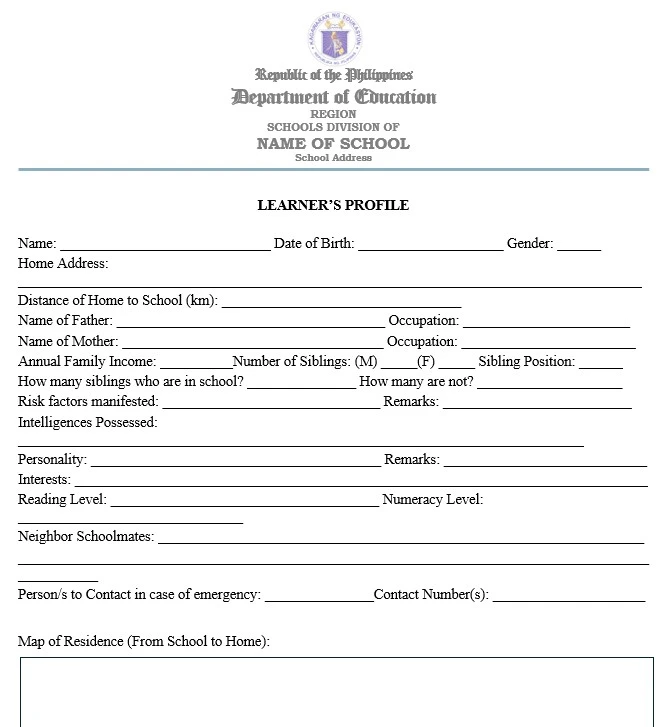
Learner Profiling Form Deped word format


How to Complete the Learner Profiling Form DepEd: Step-by-Step Guide
Step 1: Gather All Necessary Documentation
Before sitting down to complete the form, collect:
- Birth certificate copy
- School immunization records
- Previous school records
- Medical or developmental evaluation reports
- Family identification documents
Step 2: Conduct a Parent-Teacher Conference
Schedule a meeting with the student’s parents or guardians to discuss their child’s needs. This collaborative approach ensures:
- Parents feel valued and invested in the process
- You gain accurate family background information
- You can clarify questions directly with those who know the student best
- You establish important home-school partnerships from day one
Step 3: Observe the Student in Multiple Settings
Don’t rely solely on parent information. Spend time observing the student:
- During independent work
- In group activities
- During transitions
- At lunch or play time
- In different subject areas
These observations provide valuable insights into actual learning behaviors and preferences.
Step 4: Complete All Sections Thoroughly
Work through each section systematically. Use clear, legible handwriting or type the information. Avoid abbreviations that might be unclear to other educators. Be specific rather than general (write “struggles with phonemic awareness” rather than “low reader”).
Step 5: Review and Verify Information
Before finalizing:
- Double-check all contact information for accuracy
- Ensure consistency across sections
- Verify dates and school information
- Have parents sign and date the form
- Keep a copy for yourself and provide copies to relevant personnel
Step 6: Share Relevant Information with Colleagues
For the learner profile to be effective, appropriate staff must have access to relevant information:
- Classroom teacher: Complete profile
- Special education teacher: Sections on learning needs and medical info
- School counselor: Psychosocial information
- Principal: Overview of student needs
- School nurse: Health information
- Special subject teachers: Learning preferences
How to Use Learner Profile Data: Practical Applications
Completing the form is just the beginning. The real value emerges when you actively use the information to support student learning.
Personalizing Instruction
Use learner profiles to:
- Differentiate assignments based on learning styles and abilities
- Group students strategically for peer learning
- Select appropriate reading materials aligned with interests
- Adjust teaching pace based on documented learning speed
- Provide targeted interventions for identified weaknesses
Building Strong Relationships
Reference information from learner profiles to:
- Remember important family details mentioned by parents
- Celebrate student interests through classroom activities
- Show genuine care by understanding home circumstances
- Support students facing challenges with appropriate compassion
- Communicate regularly with parents about progress
Identifying Students Needing Support
Use profile data to flag students who may need:
- Referral for special education evaluation
- Counseling services for psychosocial concerns
- Enrollment in feeding programs
- Scholarship assistance
- Additional tutoring in specific subjects
- Behavioral intervention programs
Learner Profiling Form DepEd by Grade Level: Grade 1-12 Considerations
While the basic form structure remains consistent, emphasis varies by grade level:
Elementary Level (Grades 1-3)
Focus Areas:
- Pre-reading and pre-math skills
- Social-emotional development
- Self-care abilities
- Play-based learning preferences
- Family support structures
- School readiness indicators
Special Considerations: At this level, play is the primary learning mode. Document play preferences and social interaction patterns.
Primary Level (Grades 4-6)
Focus Areas:
- Academic performance in core subjects
- Peer relationships and social skills
- Learning independence
- Subject interests and aptitudes
- Fine motor development
- Behavior management needs
Special Considerations: Students are becoming more self-aware. Include their own input about strengths and challenges.
Junior High School (Grades 7-9)
Focus Areas:
- Subject-specific strengths and struggles
- Adolescent social-emotional development
- Career interests and aptitudes
- Independence and responsibility levels
- Digital literacy and technology access
- Mental health and well-being
Special Considerations: Adolescent brains are developing rapidly. Document support needs related to identity formation and peer pressure resistance.
Senior High School (Grades 10-12)
Focus Areas:
- Career pathway exploration
- Post-secondary education readiness
- Subject specialization strengths
- Leadership capabilities
- College entrance exam readiness
- Career skills development
- Mental health and stress management
Special Considerations: Focus shifts toward future planning. Include academic and career counseling information.
Disclaimer:
Some educational materials may be inspired by or aligned with DepEd curriculum standards.
However:
All materials uploaded or created are intended to support teachers and students.
If any copyrighted content is unintentionally shared, please contact us here depedlibre@gmail.com immediately for removal or proper attribution.
We respect intellectual property rights and respond promptly to valid copyright concerns.
Frequently Asked Questions About Learner Profiling Form DepEd
Q: Do we have to use the official DepEd form, or can we modify it?
A: You can modify the form to suit your school’s needs while ensuring you capture all essential information required by DepEd guidelines. However, check with your division or district office for any mandated elements.
Q: How often should we update the learner profile?
A: Update profiles at minimum twice yearly (mid-year and end of year), but ideally throughout the year as you gather new information through observation and assessment.
Q: What if parents refuse to provide certain information?
A: Respect parental choices while explaining why information is important. Document what information you do receive and continue building your understanding through classroom observation and interaction.
Q: Can students see their own learner profile?
A: This depends on age and school policy. Older students benefit from reflecting on their profiles. However, some sensitive information (health conditions, family income) might be kept confidential.
Q: How do we ensure learner profiling doesn’t lead to low expectations for certain students?
A: Use profiles to identify strengths alongside challenges. Combine deficit information with asset-based perspectives. Focus on growth potential, not fixed limitations.
Q: What should we do with completed profiles at the end of the school year?
A: Archive profiles securely. Pass them to the next teacher for continuity. Keep them in student cumulative records for reference by future educators.
Don’t forget to Follow our Facebook page for more free learning materials!
Latest News!
Download more files below!
- Adviser Files
- Aral Program Materials
- Brigada Eskwela Files
- COT Lesson Plans
- Daily Lesson Log (DLL)
- Deped Files
- Deped Modules
- Graduation Program/Files
- Homeroom Guidance Modules
- Matatag Curriculum Guide
- Matatag Lesson Exemplars
- National Learning Camp Files
- NAT Reviewer (New)
- Periodical Test (All Subjects)
- PowerPoint Game Templates
- Summative Tests/ Perfor Task
- Teacher Loans


Recent Posts
Download (by grade level)!
Grade 9 Files
Grade 10 Files
Grade 11 Files
Grade 12 Files