Aral Program Materials
ARAL Program Materials to Elevelate Learning
In the wake of learning disruptions caused by the pandemic and other educational challenges, the Department of Education (DepEd) has launched one of its most ambitious learning recovery initiatives: the Academic Recovery and Accessible Learning (ARAL) Program. With an unprecedented ₱8.93 billion funding in 2026, this program represents a transformative shift in how the Philippines addresses learning gaps in reading, mathematics, and science.
If you’re a Filipino teacher looking for comprehensive, free ARAL Program materials to support your struggling learners, this guide provides everything you need to know—from understanding the program’s foundation to downloading ready-to-use resources for your classroom.
What is the ARAL Program?
The Academic Recovery and Accessible Learning (ARAL) Program is a nationwide learning intervention established under Republic Act No. 12028, signed into law by President Ferdinand R. Marcos Jr. on October 18, 2024. The program officially launched on September 13, 2025, marking a historic commitment to ensure no Filipino learner is left behind.
The Legal Foundation: Republic Act 12028
President Marcos signed RA 12028 in response to alarming statistics revealed by the 2018 Program for International Student Assessment (PISA), which showed that 75% of Filipino students performed below minimum proficiency levels in reading, mathematics, and science. The law institutionalized the ARAL Program as a permanent fixture in the Philippine education system, moving beyond temporary recovery efforts to sustainable, long-term intervention.
“Layunin natin sa ARAL na hindi lamang tiyakin na makakahabol ang ating mga mag-aaral na nahuhuli sa klase—committed din tayo na bumuo ng mas matibay na foundational skills, dahil ang Key Stage 1 ang pinakamahalagang yugto sa pag-unlad ng bawat bata.”
— Education Secretary Sonny Angara
Implementation Guidelines: DepEd Order No. 18, s. 2025
The program’s operational framework is outlined in DepEd Order No. 18, s. 2025, titled “Implementing Guidelines of the Academic Recovery and Accessible Learning (ARAL) Program,” issued on June 13, 2025. This comprehensive order establishes the mechanisms for learner assessment, tutor selection and training, delivery modes, and phased implementation beginning School Year 2025-2026.
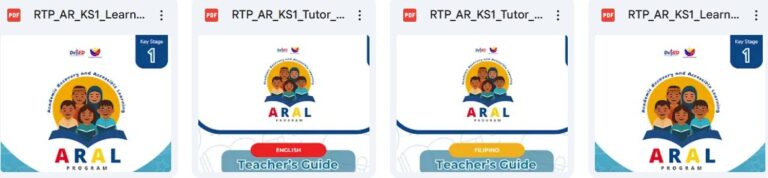
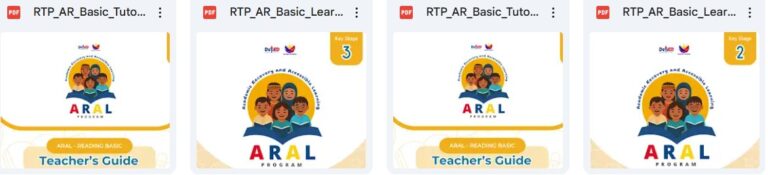
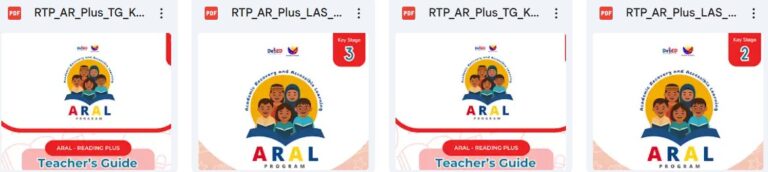
Download here the ARAL Program Materials!
Who Benefits from ARAL Program Materials?
The ARAL Program targets learners who need additional support to achieve grade-level competencies:
Primary Beneficiaries
Learner Category | Description | Grade Levels |
Struggling Readers | Low and high emerging readers, frustrated readers below minimum proficiency | Grades 4-10 (Reading focus) |
Mathematics Learners | Students below grade-level competency in numeracy and problem-solving | Grades 1-10 |
Science Learners | Learners struggling with scientific concepts and processes | Grades 3-10 (future phase) |
Pandemic-Affected Students | Those who did not enroll or experienced significant disruptions from 2020-2021 | Kindergarten to Grade 10 |
Transfer Students | Learners new to the system or returning after extended absence | All applicable levels |
Current Focus: ARAL-Reading (SY 2025-2026)
For School Year 2025-2026, the program prioritizes Reading (ARAL-Reading) for immediate assistance to learners who need it most, particularly low and high emerging readers, as well as those classified as frustrated readers. The program will expand to include ARAL-Mathematics and ARAL-Science in subsequent phases.
Understanding ARAL Program Materials
ARAL Program materials are specifically designed learning resources that support targeted intervention for struggling learners. These materials differ from regular classroom resources in several critical ways:
Key Characteristics of ARAL Materials
- Skills-Based and Competency-Focused
Unlike traditional textbooks that follow a linear curriculum, ARAL materials target specific competencies where learners show deficiencies. Each resource is designed to build mastery of essential skills through focused, repeated practice.
- Learner-Centered and Developmentally Appropriate
According to DepEd Order No. 18, s. 2025, all ARAL learning resources must be:
- Learner-centered
- Skills-based
- Inclusive
- Developmentally appropriate
- Relevant
- Gender and culture-sensitive
- Contextualized to local realities
- Consumable and Accessible
ARAL materials are designed as consumable resources—learners interact directly with the materials through writing, drawing, and hands-on activities. This approach promotes active learning and allows teachers to monitor individual progress effectively.
- Quality-Assured
All ARAL learning resources undergo rigorous quality assurance at multiple governance levels:
- School Level: School head approval
- Division Level: Curriculum Implementation Division (CID) review
- Regional Level: Curriculum and Learning Management Division (CLMD) validation
- Central Office: Bureau of Learning Resources consultation when needed
Share to your friends!
Types of ARAL Program Materials Available
ARAL-Reading Materials (Currently Available)
The ARAL-Reading materials represent the program’s initial rollout and include comprehensive resources for Grades 4-10:
- Activity Plans and Worksheets
Purpose: Structured daily lessons targeting specific reading competencies
Contents:
- Phonemic awareness activities
- Phonics instruction sheets
- Fluency building exercises
- Vocabulary development tasks
- Reading comprehension activities
- Critical thinking questions
Format: Downloadable PDF files, one page per day or as assessed by teacher
Grade Coverage: Grades 4-10
Access: Available through official DepEd channels and division learning resource portals
- Flashcards
Purpose: Quick recognition and reinforcement tools for sight words, vocabulary, and key concepts
Contents:
- High-frequency sight words
- Grade-appropriate vocabulary terms
- Word families and phonics patterns
- Comprehension strategy prompts
Recommended Use:
- Daily review sessions
- Small group tutorials
- Individual practice
- Assessment tools
- Reading Assessment Tools
Purpose: Diagnostic and progress monitoring instruments to track learner improvement
Types:
- Beginning of School Year (BoSY) assessments
- Middle of School Year (MoSY) assessments
- End of School Year (EoSY) assessments
- Weekly progress checks
- Oral reading fluency measures
Data Use: Results inform tutorial groupings and intervention intensity
ARAL-Mathematics Materials (Currently Available)
Mathematics intervention materials are available for the broadest grade range:
Activity Plans and Worksheets
Grade Coverage: Grades 1-10
Competency Areas:
- Number sense and operations
- Measurement and geometry
- Patterns and algebra
- Data analysis and probability
- Problem-solving strategies
Special Features:
- Answer Keys Included: All mathematics worksheets come with complete answer keys for efficient checking and self-assessment
- Scaffolded Learning: Activities progress from concrete to abstract understanding
- Real-World Applications: Contextualized problems relevant to Filipino learners
Manipulatives and Visual Aids
While not always included in downloadable materials, the ARAL Program encourages the use of:
- Counting materials
- Geometric shapes
- Measurement tools
- Graphic organizers
- Number lines and charts
Future ARAL-Science Materials (Coming Soon)
ARAL-Science materials are under development for Grades 3-10, focusing on:
- Scientific inquiry and investigation
- Conceptual understanding
- Science process skills
- STEM integration


How to Access ARAL Program Materials
Official DepEd Channels
Primary Access Point: https://tinyurl.com/ARALMaterials
This shortened URL directs to the official Bureau of Learning Resources repository where all verified ARAL materials are housed.
Division and Regional Portals
Many divisions have created localized access points for ARAL materials:
Regional Examples:
Nueva Vizcaya SDO:
- Project REAL LRs (Reinventing Exclusive Access to Libraries and Learning Resources)
- ARAL Reading Resources on SDO Drive and Regional Office Drive
- URL: https://sites.google.com/deped.gov.ph/sdonvlrms/lrms-collection/aral-materials
Vigan City SDO:
- Organized by subject area
- Learner’s Workbooks for English and Filipino
- Tutor’s Guides with implementation instructions
- URL: https://depedvigancity.com/index.php/aral-materials/
School-Based Access
Your school’s Learning Resource Management System (LRMS) coordinator or ARAL focal person should have access to all materials. Schools typically organize ARAL materials through:
- Physical Resource Centers: Printed materials kept in school libraries or resource rooms
- Digital Repositories: Cloud storage (Google Drive, OneDrive) with organized folders
- USB Drives: Offline access for schools with limited connectivity
- Printed Compilations: Bound collections for classroom reference
Quality Assurance Verification
Important: Always verify that materials are officially approved by checking for:
- DepEd logo and branding
- Quality assurance stamps from CID/CLMD
- Clear citation of DepEd Order No. 18, s. 2025
- Appropriate competency alignment
Warning: Avoid using commercial or unauthorized materials claiming to be “ARAL-approved” without verification from your division office.
Specific Grade-Level ARAL Materials: What's Available
Kindergarten Materials
While ARAL officially targets Grades 1-10, Kindergarten learners showing readiness concerns can benefit from preparatory materials:
Available Resources:
- Pre-reading readiness activities
- Oral language development exercises
- Early numeracy concepts
- Fine motor skill development sheets
Special Considerations:
- Focus on play-based learning
- Parent involvement materials
- Assessment uses ECCD checklist integration
- No formal tutorial structure required
Grade 1 ARAL Program Materials
ARAL-Reading Grade 1:
Learner’s Workbook for English 1:
- Phonemic awareness development
- Letter recognition and formation
- Beginning reading skills
- Simple sight words
- Picture comprehension
Learner’s Workbook for Filipino 1:
- Pagkilala sa mga titik at tunog
- Pagbasa ng mga salitang pansarili
- Pag-unawa sa mga simpleng kuwento
- Pagsulat ng mga salita
Tutor’s Guide for English 1:
- Daily lesson structure
- Assessment protocols
- Intervention strategies
- Progress tracking tools
Tutor’s Guide for Filipino 1:
- Detalyadong lesson plans
- Mga estratehiya sa pagtuturo
- Mga paraan ng pagsusukat ng pag-unlad
ARAL-Mathematics Grade 1:
Activity Plans and Worksheets:
- Counting 1-100
- Number recognition and writing
- Basic addition and subtraction
- Simple patterns
- Basic shapes and sizes
- Measurement concepts (long/short, heavy/light)
Answer Keys:
- Complete solutions for all worksheets
- Alternative solution methods
- Common error analysis
Grades 2-3 ARAL Program Materials
ARAL-Reading Grades 2-3:
Focus Areas:
- Reading fluency development
- Vocabulary expansion
- Comprehension strategies (literal and inferential)
- Writing integration
Material Types:
- Leveled reading passages
- Comprehension question sets
- Vocabulary builders
- Writing prompts
ARAL-Mathematics Grades 2-3:
Core Competencies:
- Multi-digit operations
- Multiplication and division basics
- Fractions introduction
- Time and money
- Data collection and graphing
Scaffolding Approach:
- Concrete manipulative guides
- Pictorial representation activities
- Abstract problem-solving
Grades 4-6 ARAL Program Materials
ARAL-Reading Grades 4-6:
This represents the priority intervention level with the most comprehensive materials available:
Activity Plans (10-week cycles):
- Week 1-2: Reading fluency and accuracy
- Week 3-4: Vocabulary in context
- Week 5-6: Main idea and supporting details
- Week 7-8: Making inferences and predictions
- Week 9-10: Critical reading and evaluation
Flashcard Sets:
- Content-specific vocabulary (Science, Social Studies)
- Academic language
- Signal words for comprehension
- Root words and affixes
Assessment Battery:
- Oral reading fluency assessments
- Silent reading comprehension tests
- Vocabulary mastery checks
- Writing response rubrics
ARAL-Mathematics Grades 4-6:
Advanced Topics:
- Complex fractions, decimals, and percentages
- Geometry and spatial reasoning
- Advanced problem-solving
- Data analysis and interpretation
- Algebraic thinking
Real-World Contextualization:
- Filipino market scenarios
- Local measurement situations
- Community data projects
- Financial literacy integration
Grades 7-10 ARAL Program Materials
ARAL-Reading Grades 7-10:
Adolescent Literacy Focus:
- Academic vocabulary across disciplines
- Complex text structures
- Argumentative and persuasive text analysis
- Research and citation skills
- Digital literacy integration
Cross-Curricular Materials:
- Science text comprehension
- Social Studies document analysis
- Mathematical word problems
- Literary analysis
ARAL-Mathematics Grades 7-10:
Secondary Mathematics Competencies:
- Algebraic operations and functions
- Geometric proofs and constructions
- Trigonometry basics
- Statistics and probability
- Real-world applications
Problem-Solving Emphasis:
- Multi-step word problems
- Non-routine problem sets
- STEM-integrated challenges
- Collaborative problem-solving activities
Using ARAL Program Materials Effectively
The ARAL Tutorial Session Structure
DepEd Order No. 18, s. 2025 establishes guidelines for tutorial implementation. Here’s how to maximize the effectiveness of ARAL materials within this framework:
Recommended Session Duration
Grade Level | Session Length | Frequency |
Kindergarten-Grade 3 | 30-45 minutes | 3-4 times weekly |
Grades 4-6 | 45-60 minutes | 4-5 times weekly |
Grades 7-10 | 60 minutes | 4-5 times weekly |
Tutorial Session Flow
- Pre-Assessment (5 minutes)
- Quick diagnostic check
- Review previous lesson retention
- Identify immediate needs
- Direct Instruction (15-20 minutes)
- Introduce or reinforce specific competency
- Use ARAL activity plan as guide
- Model skills and strategies
- Check for understanding
- Guided Practice (15-20 minutes)
- Learners work on ARAL worksheets with support
- Tutor provides immediate feedback
- Address misconceptions
- Differentiate as needed
- Independent Practice (10-15 minutes)
- Learners complete additional worksheet items
- Tutor observes and documents progress
- Identify areas needing reteaching
- Closure and Assessment (5 minutes)
- Quick recap of key learning
- Exit ticket or formative assessment
- Preview next session
- Assign practice if appropriate
Differentiation Strategies with ARAL Materials
Not all struggling learners have the same needs. Here’s how to differentiate using ARAL materials:
For Very Low Readers (Frustrated Readers)
Modifications:
- Start with materials one grade level below
- Reduce worksheet length (print only 3-4 items)
- Increase one-on-one time
- Use more concrete manipulatives
- Incorporate audiovisual aids
Example: Grade 6 frustrated reader might start with Grade 4 ARAL-Reading materials, building confidence before progressing.
For Emerging Readers
Approach:
- Use grade-level ARAL materials as designed
- Provide scaffolding through modeling
- Use peer tutoring pairs
- Incorporate repeated reading strategies
- Gradually increase text complexity
For Accelerating Readers
Enhancement:
- Complete ARAL worksheets independently
- Add extension activities (writing responses, creative tasks)
- Transition to grade-level classroom materials
- Serve as peer tutors for others
- Focus on higher-order thinking skills
Contextualization: Making Materials Locally Relevant
DepEd Order No. 18, s. 2025 explicitly encourages contextualization. Here’s how:
Reading Materials:
- Replace unfamiliar references with local examples
- Add cultural notes explaining concepts
- Create supplementary passages about local events
- Use examples from learner experiences
Mathematics Problems:
- Change store names to local sari-sari stores
- Use Philippine currency in all money problems
- Reference local transportation (jeepney, tricycle)
- Include local measurements (ganta, kilo)
- Use familiar food items and prices
Science Concepts:
- Connect to local environment and ecology
- Reference Philippine flora and fauna
- Use community health examples
- Incorporate local industry and livelihood
Example Contextualization:
Original Problem: “Maria bought 3 apples at ₱25 each. How much did she spend?”
Contextualized: “Maria bought 3 mangoes from Aling Rosa’s fruit stand at ₱25 each. How much did she spend?”
Integration with Regular Classroom Instruction
ARAL materials are not meant to replace classroom lessons but to supplement and reinforce them:
Coordination Strategy:
- Share assessment data with classroom teachers
- Align ARAL topics with upcoming classroom lessons when possible
- Use ARAL materials for additional practice on classroom competencies
- Communicate progress regularly between tutor and teacher
- Celebrate achievements in both settings
Example Integration:
If the Grade 4 classroom teacher is teaching fractions in Week 5:
- ARAL tutor reviews fraction basics from ARAL-Math materials
- Provides extra practice on fraction concepts
- Reinforces vocabulary (numerator, denominator)
- Prepares learner for classroom assessments
Disclaimer:
Some educational materials may be inspired by or aligned with DepEd curriculum standards.
However:
All materials uploaded or created are intended to support teachers and students.
If any copyrighted content is unintentionally shared, please contact us immediately for removal or proper attribution.
We respect intellectual property rights and respond promptly to valid copyright concerns.
Download below more free files!
- Adviser Files
- Aral Program Materials
- Brigada Eskwela Files
- COT Lesson Plans
- Daily Lesson Log (DLL)
- Deped Files
- Deped Modules
- Graduation Program/Files
- Homeroom Guidance Modules
- Matatag Curriculum Guide
- Matatag Lesson Exemplars
- National Learning Camp Files
- NAT Reviewer (New)
- Periodical Test (All Subjects)
- PowerPoint Game Templates
- Summative Tests/ Perfor Task
- Teacher Loans