
Brigada Eskwela 2026: Complete Guide, Forms, Templates, and Materials
Brigada Eskwela Files 2026
The countdown to School Year 2026-2027 has begun, and Brigada Eskwela 2026 is scheduled from June 1 to 5, 2026, bringing together teachers, parents, students, and community volunteers in the spirit of bayanihan. If you’re a school head, teacher, or education stakeholder looking for the most comprehensive resource on Brigada Eskwela 2026, you’ve come to the right place.
This guide covers everything you need—from official forms and templates to step-by-step implementation guidelines, downloadable materials, and practical tips that will make your school’s preparation seamless and successful.
Important Dates You Need to Know
Table of Contents
Let’s start with the timeline that matters:
| Event | Date | Location/Details |
|---|---|---|
| National Kick-Off Program | May 29, 2026 | Cabadbaran City, CARAGA |
| Brigada Eskwela Week | June 1-5, 2026 | Nationwide implementation |
| School Year 2026-2027 Opening | June 8, 2026 | All public schools |
| DPDS Submission Deadline | July 6, 2026 | Schools to SDOs |
| Accomplishment Report (SDO to RO) | July 15, 2026 | Division level |
| Final Report (RO to Central Office) | July 30, 2026 | Regional level |
Pro Tip: Mark these dates on your school calendar now. The two-month preparation window before June 1 is critical for conducting needs assessments and mobilizing your community.
What is Brigada Eskwela 2026?
Brigada Eskwela is an annual initiative of DepEd aimed at ensuring that schools are ready for the start of the school year. But it’s much more than just cleaning classrooms and painting walls. Department of Education
This year’s theme tells the whole story: “Bayanihan sa Paaralan: Nagkakaisa para sa Kaayusan at Kaalaman” (Unity in Schools: Coming Together for Order and Learning).
Why This Theme Matters
The 2026 theme highlights the power of collective action to strengthen both learning and school environments, emphasizing enhancing school infrastructure alongside literacy development. Unlike previous years that focused primarily on physical facilities, the 2026 iteration places equal emphasis on:
- Physical school preparation (repairs, painting, facility upgrades)
- Literacy development (reading spaces, libraries, book collections)
- Safety and disaster resilience (emergency preparedness measures)
- Learner well-being (creating welcoming, inclusive spaces)
Brigada Eskwela 2026 Theme
The official theme for Brigada Eskwela 2026 is more than just a slogan—it’s a call to action that reflects the evolving priorities of Philippine education.
Understanding “Bayanihan sa Paaralan: Nagkakaisa para sa Kaayusan at Kaalaman”
Let’s break down what this powerful theme means for your school:
“Bayanihan sa Paaralan” (Unity in Schools)
- Emphasizes collective effort over individual contributions
- Honors the Filipino tradition of community cooperation
- Reminds us that education is everyone’s responsibility
“Nagkakaisa” (Coming Together)
- Calls for collaboration across all sectors
- Bridges gaps between teachers, parents, LGUs, and private partners
- Strengthens the social fabric of school communities
“para sa Kaayusan” (for Order/Organization)
- Highlights physical school readiness
- Focuses on safe, functional, well-maintained facilities
- Addresses the practical needs of learners
“at Kaalaman” (and Knowledge/Learning)
- This is what’s new in 2026—the explicit focus on literacy
- Connects physical preparation to academic outcomes
- Reminds us that clean schools support better learning
How to Incorporate the Theme in Your Activities
During Planning:
- Design activities that address BOTH physical facilities AND learning resources
- Create reading corners while painting classrooms
- Organize book donations alongside furniture repairs
During Implementation:
- Include storytelling sessions during break times
- Set up mini-libraries in waiting areas
- Display the theme prominently on all materials
In Your Messaging:
- Use the theme in all communications with stakeholders
- Explain how each activity connects to “Kaayusan at Kaalaman”
- Share success stories that embody bayanihan spirit
Share to your friends!
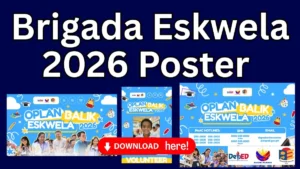
Brigada Eskwela 2026 Poster
A well-designed poster is your first line of communication with the community. It should inform, inspire, and invite participation.
Essential Elements of Your Brigada Eskwela 2026 Poster
Must-Have Information:
- Official theme in Filipino
- Dates: June 1-5, 2026
- Your school name and logo
- Brief description of activities planned
- How to participate (contact person, registration details)
- Volunteer categories (manual work, donations, professional services)
- DepEd logo and memorandum reference
Design Best Practices:
Color Scheme:
- Use DepEd’s blue and white as primary colors
- Add Filipino flag colors (red, blue, yellow, white) as accents
- Ensure high contrast for readability
Typography:
- Headline: Bold, 72-96pt font for the theme
- Sub-headings: 36-48pt for dates and school name
- Body text: Minimum 18pt for readability from distance
- Use readable fonts like Arial, Calibri, or Montserrat
Imagery:
- Show diverse community members working together
- Include images of students in a clean, vibrant classroom
- Avoid stock photos—use actual photos from your school if possible
- Show literacy elements (books, reading areas) alongside physical work
Layout Tips:
- Leave 10-15% white space—don’t overcrowd
- Follow the Z-pattern: Eye flows from top-left to top-right, then diagonal to bottom-left, across to bottom-right
- Make key information (dates, contact) stand out with boxes or borders
Where to Display Your Posters
Strategic Locations:
- School gates and main entrance
- Community bulletin boards (barangay hall, churches, markets)
- Partner establishments (with permission)
- Teachers’ lounge and faculty room
- Social media (digital version)
Timing:
- First wave: Mid-April (early awareness)
- Second wave: Early May (call to action)
- Final wave: Last week of May (reminder and countdown)
Brigada Eskwela Tarpaulin and Backdrop
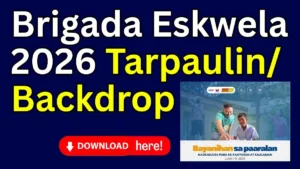
While posters work for close-range viewing, tarpaulins and backdrops make your Brigada Eskwela visible from afar and create professional documentation opportunities.
Tarpaulin Design Guidelines
Standard Sizes:
- Small: 2ft x 4ft (for school entrances)
- Medium: 3ft x 6ft (for main gates)
- Large: 4ft x 8ft (for street-facing walls)
Content Hierarchy for Tarpaulins:
Top Section (25%):
- DepEd logo
- School name and logo
- “Brigada Eskwela 2026”
Middle Section (50%):
- Official theme in large, bold letters
- “Bayanihan sa Paaralan: Nagkakaisa para sa Kaayusan at Kaalaman”
- Dates: June 1-5, 2026
- Inspiring image or illustration
Bottom Section (25%):
- List of activities or call to action
- Contact information (optional)
- Partner/sponsor acknowledgment (small, tasteful)
Important Design Considerations:
Visibility from Distance:
- Text should be readable from at least 30 feet away
- Use bold, sans-serif fonts
- Maximum 7-8 words per line for headlines
Weather Resistance:
- Use weatherproof materials (laminated or vinyl)
- Secure properly to withstand wind and rain
- Plan for June monsoon season
Free Editable Templates:
Several DepEd-aligned websites offer free tarpaulin templates:
- Download from official DepEd regional websites
- Customize with your school information
- Use Canva, Photoshop, or free tools like GIMP
Backdrop Design for Events
Purpose: Backdrops serve as professional backgrounds for:
- Opening and closing ceremonies
- Photo documentation with volunteers
- Recognition programs
- Media coverage
Recommended Size: 8ft x 10ft or 10ft x 10ft
Design Elements:
Center Focus:
- School name prominently displayed
- Brigada Eskwela 2026 logo
- Official theme
Visual Balance:
- Symmetrical design works best
- Use repeating patterns or graphics
- Include DepEd seal and your school seal
Photo-Friendly Design:
- Keep the center 60% relatively simple
- Place detailed graphics on the sides
- Use colors that photograph well (avoid neon or very dark colors)
Practical Tip: Create a modular backdrop that can be reused for other school events by keeping the core design generic and adding removable Brigada-specific elements.
Brigada Eskwela 2026 Shirt Design
Matching shirts create unity, professionalism, and visual impact during Brigada Eskwela week. They also serve as walking advertisements for your school’s community spirit.
Planning Your Brigada Eskwela Shirts
Who Needs Shirts?
- Brigada Eskwela Working Committee members
- Regular volunteers (optional)
- School administrators
- Partner organization representatives
Budget-Friendly Options:
- Premium approach: Custom printed shirts for all
- Smart approach: Colored plain shirts + printed labels/ribbons
- Minimal approach: Uniform color code (e.g., “wear blue”)
Design Elements for Shirts
Front Design (Chest/Pocket Area):
- School logo
- “Brigada Eskwela 2026”
- Small version of official theme
Back Design:
- Large, bold theme text
- Optional: List of core values or activities
- Optional: “Volunteer” designation
Sleeve Design (Optional):
- DepEd logo
- Sponsor acknowledgment (tasteful, small)
Color Recommendations:
| Shirt Color | Print Color | Visual Impact | Best For |
|---|---|---|---|
| Royal Blue | White/Yellow | High visibility, official | Committee members |
| White | Blue/Red | Clean, professional | All volunteers |
| Light Blue | Navy Blue | Softer, approachable | Support staff |
| Yellow | Blue | Bright, energetic | Student volunteers |
| Red | White | Bold, attention-grabbing | Team leaders |
Practical Considerations:
Fabric Choice:
- Cotton: Comfortable, breathable, affordable
- Dri-fit/Polyester: Better for physical work, quick-dry
- Cotton-poly blend: Best of both worlds
Sizing:
- Order a range of sizes: XS to 3XL
- Keep 10% extra stock for last-minute volunteers
- Consider gender-specific cuts vs. unisex
Printing Methods:
- Screen printing: Cost-effective for 50+ shirts
- Heat transfer: Good for smaller quantities
- Embroidery: Premium look, higher cost
Creative Variations
Role-Specific Shirts:
- Different colors for different work teams
- Safety team in neon yellow/orange
- Documentation team in distinctive color
QR Code Integration:
- Add QR code linking to your school’s Facebook page
- Link to digital volunteer registration
- Connect to Brigada Eskwela photo gallery
Brigada Eskwela I.D Portrait
Professional ID portraits aren’t just for documentation—they enhance security, organization, and recognition throughout Brigada Week.
Why ID Portraits Matter
Security:
- Easy identification of authorized volunteers
- Prevents unauthorized individuals on campus
- Required for contractors and external partners
Organization:
- Quick role identification
- Streamlines task assignment
- Helps volunteers find team leaders
Recognition:
- Volunteers feel officially part of the team
- Creates sense of belonging
- Useful for thank-you materials later
Creating Effective Brigada Eskwela IDs
Essential Information:
Front Side:
- Volunteer photo (passport-style)
- Full name (clear, large font)
- Role/Position (e.g., “Painting Team,” “Documentation,” “Safety Officer”)
- School name
- “Brigada Eskwela 2026” header
- Volunteer ID number
Back Side:
- Emergency contact information
- Volunteer signature
- School head’s signature
- Validity dates (June 1-5, 2026)
- Brief safety reminders
Design Template Specifications:
Standard Size: 3.5″ x 2.5″ (credit card size) or 3″ x 4″ (portrait orientation)
Layout Elements:
- Header: Brigada Eskwela 2026 logo (20% of card)
- Photo area: 1.5″ x 2″ passport-style image
- Information section: Name, role, ID number
- Footer: School name and contact (10% of card)
Color Coding by Role:
| Role | ID Card Color | Purpose |
|---|---|---|
| Committee Members | Gold/Orange | Leadership identification |
| Safety Officers | Red | Emergency response |
| Documentation Team | Blue | Photo/video authorization |
| General Volunteers | Green | Standard participants |
| External Partners | Purple | Non-school personnel |
Production Options
DIY Approach:
- Use Microsoft Word/Publisher templates
- Print on cardstock
- Laminate with affordable laminators
- Attach to lanyards with clips
Professional Service:
- Local printing shops can produce for ₱15-30 per ID
- Faster for large quantities (100+ IDs)
- Better quality and durability
Digital Alternative:
- Create digital IDs viewable on smartphones
- Use Google Forms to generate unique QR codes
- Eco-friendly and cost-effective
- May not work for all contexts (older volunteers, connectivity issues)
Best Practices
Photo Guidelines:
- Use well-lit, clear photos
- Plain background preferred
- Face should be clearly visible
- Update photos if using previous year’s volunteers
Distribution:
- Distribute during orientation (May 31 or June 1 morning)
- Collect back at the end of each day or after Brigada Week
- Keep master list of ID assignments
Bonus Use:
- Include in volunteer appreciation packages
- Use as entry passes for recognition program
- Create commemorative “I Participated” certificates with ID photo
Brigada Eskwela 2026 Presentation Template
Whether you’re pitching to potential partners, orienting volunteers, or reporting accomplishments, a professional presentation template is invaluable.
Types of Presentations You’ll Need
1. Partner Solicitation Presentation (Pre-Implementation) 2. Volunteer Orientation Presentation (Implementation) 3. Accomplishment Report Presentation (Post-Implementation) 4. Media/Stakeholder Updates (Throughout)
Master Template Design Guidelines
Slide Dimensions: 16:9 (widescreen) for modern projectors and screens
Color Palette:
- Primary: DepEd blue (
#003DA5) - Secondary: White, light gray
- Accent: Yellow (
#FCD116) from Philippine flag - Highlight: Red (
#CE1126) for important points
Typography:
- Headings: Montserrat Bold or Arial Black (28-44pt)
- Body text: Open Sans or Calibri (18-24pt)
- Captions: 14-16pt minimum
Essential Slides for Each Presentation Type
Partner Solicitation Deck (10-15 slides):
- Title slide (School name, Brigada 2026, date)
- About Brigada Eskwela (national context)
- Our school’s vision and needs
- Specific project proposals with visuals
- Partnership benefits and recognition
- Donation options and categories
- Previous year’s accomplishments (before/after photos)
- Impact on students (statistics, testimonials)
- How to participate
- Contact information and next steps
Volunteer Orientation Deck (8-12 slides):
- Welcome slide
- What is Brigada Eskwela 2026
- Official theme explanation
- Our school’s goals for this week
- Daily schedule overview
- Safety guidelines and protocols
- Team assignments and leaders
- Important reminders (what to bring, prohibited items)
- Recognition program information
- Q&A and closing
Accomplishment Report Deck (12-18 slides):
- Title slide with dates covered
- Executive summary
- Objectives vs. achievements
- Activities completed (with photos)
- Volunteer participation statistics
- Donations received (categorized)
- Before and after comparisons
- Challenges encountered
- Solutions implemented
- Financial transparency (if applicable)
- Community impact stories
- Sustainability plans
- Thank you and recognition
- Next steps
Design Best Practices
Visual Hierarchy:
- One main idea per slide
- Use the 6×6 rule: Maximum 6 bullet points, 6 words each
- High-quality images > text-heavy slides
Image Usage:
- Use your own school photos whenever possible
- Before/after images are highly effective
- Show people, not just facilities
- Capture emotion and community spirit
Data Visualization:
- Convert numbers into charts/graphs
- Use icons to represent quantities
- Infographics for complex information
- Progress bars for completion rates
Free Template Resources
Recommended Platforms:
- Google Slides: Free, collaborative, cloud-based
- Canva: User-friendly with education templates
- Microsoft PowerPoint: Professional, feature-rich
- Prezi: Dynamic, non-linear presentations
What to Look For:
- Editable text and image placeholders
- Consistent design across slides
- Chart and table templates
- Icon libraries
- Philippine/DepEd-themed elements
Customization Tips:
- Replace generic images with your school photos
- Update color scheme to match your school colors while keeping DepEd elements
- Add your school logo to master slide
- Create custom slide layouts for recurring content types
Brigada Eskwela 2026 Certificates
Recognition is the fuel that keeps volunteer spirit alive—not just for this year, but for future Brigada Eskwela implementations.
Types of Certificates Needed
1. Volunteer Participation Certificate
- For all individuals who contributed time/effort
- Standard template with personalization
2. Partner/Donor Certificate of Appreciation
- For organizations and individuals who donated resources
- More formal, official design
3. Outstanding Volunteer Award
- For exceptional contributors
- Premium design with special recognition
4. Partner of the Year Recognition
- For long-term, significant supporters
- Highest level of appreciation
Essential Certificate Elements
Header Section:
- School letterhead or official seal
- “Brigada Eskwela 2026” prominently displayed
- Certificate type clearly stated
Body Text:
This Certificate of Appreciation is presented to

[VOLUNTEER NAME]

In recognition of valuable contribution and dedicated service
during the Brigada Eskwela 2026 program held on
June 1-5, 2026 at [School Name]

Your selfless commitment embodies the true spirit of
"Bayanihan sa Paaralan: Nagkakaisa para sa Kaayusan at Kaalaman"

Through your efforts, we have created a safer, cleaner, and more
inspiring learning environment for our learners.
Footer Section:
- Date of issuance
- School head signature
- PTA president signature (optional)
- Brigada Eskwela coordinator signature
- Official school seal/stamp
Design Specifications
Standard Size: 8.5″ x 11″ (letter size) or 11″ x 8.5″ (landscape)
Border Styles:
- Formal: Classic gold/blue decorative border
- Modern: Clean lines with school colors
- Festive: Filipino cultural elements (sampaguita, sun rays)
Paper Quality:
- Minimum: 180gsm cardstock
- Recommended: 220-250gsm premium certificate paper
- Special: Parchment or textured paper for top awards
Color Schemes:
| Certificate Type | Primary Color | Accent | Feel |
|---|---|---|---|
| Volunteer Participation | Blue | Gold | Professional, official |
| Donor Appreciation | Maroon | Silver | Prestigious, grateful |
| Outstanding Award | Navy | Gold foil | Premium, distinguished |
| Partner Recognition | Green | Gold emboss | Growth, partnership |
Personalization Fields
Must Customize:
- Recipient name (check spelling!)
- Specific contribution (e.g., “for leading the painting team”)
- Dates
- Signatures (original ink preferred)
Optional Enhancements:
- QR code linking to digital gallery
- Serial number for authenticity
- Volunteer hours contributed
- Specific project completed
Production Tips
Printing:
- Use high-quality printer (1200 DPI minimum)
- Consider professional printing for 50+ certificates
- Test print on regular paper first
- Print extra copies for errors/replacements
Signing:
- Schedule dedicated signing session with signatories
- Use quality pens (black or blue ink)
- Ensure signatures are legible
- Add official seal after signatures dry
Distribution:
- Present during closing ceremony for maximum impact
- Hand personally with eye contact and gratitude
- Prepare backup certificates for absent volunteers
- Create digital versions for social media sharing
Going Beyond Traditional Certificates
Digital Badges:
- Create shareable social media graphics
- “I volunteered for Brigada Eskwela 2026” frames
- LinkedIn-style endorsement badges
Video Recognition:
- Short video montage of volunteers in action
- Personalized thank-you video messages
- Post on school social media with tags
Recognition Wall:
- Physical display board with photos and names
- QR codes linking to individual testimonials
- Permanent installation honoring recurring volunteers
Brigada Eskwela 2026 School Readiness Checklist
This is arguably the most important tool in your Brigada Eskwela arsenal. A comprehensive checklist ensures nothing falls through the cracks and provides measurable proof of readiness.
Understanding the Official Checklist
Annex A, known as the School Preparedness Checklist, plays a crucial role in assessing the readiness of schools before the opening of classes, providing a comprehensive guide for evaluating facilities, learning resources, health and safety measures, disaster preparedness, and learner support systems. Teachers Click
This isn’t just a formality—it’s your diagnostic tool for identifying gaps and prioritizing work during Brigada Week.
Complete School Readiness Checklist for 2026
Section 1: Physical Facilities and Infrastructure
Classrooms (Assess each classroom individually):
| Item | Criteria | Status | Action Needed |
|---|---|---|---|
| Walls | Clean, no cracks, proper paint | ☐ Ready ☐ Needs work | |
| Ceiling | Intact, no leaks, no holes | ☐ Ready ☐ Needs work | |
| Floor | Level, clean, no tripping hazards | ☐ Ready ☐ Needs work | |
| Doors | Functional locks, hinges, handles | ☐ Ready ☐ Needs work | |
| Windows | Clean glass, working latches, screens intact | ☐ Ready ☐ Needs work | |
| Lighting | All bulbs working, adequate illumination | ☐ Ready ☐ Needs work | |
| Ventilation | Windows open, fans functional (if applicable) | ☐ Ready ☐ Needs work | |
| Electrical outlets | Safe, functional, proper covering | ☐ Ready ☐ Needs work | |
| Blackboard/Whiteboard | Smooth surface, visible writing, clean erasers | ☐ Ready ☐ Needs work | |
| Bulletin boards | Mounted securely, fresh backing paper | ☐ Ready ☐ Needs work |
Furniture:
☐ Sufficient chairs for all enrolled students ☐ Chairs in good condition (stable, no sharp edges) ☐ Appropriate chair height for grade level ☐ Sufficient desks/tables ☐ Desks level and stable ☐ Teacher’s table and chair functional ☐ Storage cabinets/shelves present and organized ☐ No broken furniture in classroom
Outdoor Facilities:
☐ Playgrounds safe (no broken equipment) ☐ Sports facilities marked and functional ☐ Pathways clear and even ☐ Stairs with handrails and non-slip surfaces ☐ Covered walkways (where applicable) ☐ Flagpole and flag in good condition ☐ Perimeter fence intact and secure ☐ Gates functional with proper locks
Section 2: Water, Sanitation, and Hygiene (WASH)
Water Facilities:
☐ Reliable water source available ☐ Drinking fountain clean and functional ☐ Faucets working without leaks ☐ Water storage clean and covered ☐ Handwashing stations near toilets ☐ Handwashing stations near eating areas ☐ Soap available at all handwashing points
Toilet Facilities:
| Standard | Check | Notes |
|---|---|---|
| 1 toilet per 50 students | ☐ Met ☐ Not Met | Current ratio: ___ |
| Separate boys/girls facilities | ☐ Yes ☐ No | |
| Clean and odor-free | ☐ Yes ☐ No | |
| Toilet bowls/seats intact | ☐ Yes ☐ No | |
| Flush/pour-flush functional | ☐ Yes ☐ No | |
| Toilet paper/tissue available | ☐ Yes ☐ No | |
| Proper lighting | ☐ Yes ☐ No | |
| Functional locks on doors | ☐ Yes ☐ No | |
| Trash bins present | ☐ Yes ☐ No | |
| Handwashing area nearby | ☐ Yes ☐ No | |
| Menstrual hygiene disposal (girls’ toilets) | ☐ Yes ☐ No |
Waste Management:
☐ Adequate number of trash bins ☐ Separate bins for biodegradable/non-biodegradable ☐ Regular waste collection system in place ☐ Designated waste storage area ☐ No accumulated garbage on campus
Section 3: Safety and Disaster Preparedness
Fire Safety:
☐ Fire extinguishers present (check expiry dates) ☐ Fire extinguishers accessible and properly mounted ☐ Clear fire exit signs ☐ Fire exits unobstructed ☐ Emergency evacuation plan posted ☐ Fire drill schedule planned ☐ Smoke detectors installed (if applicable) ☐ No exposed electrical wiring
Earthquake Preparedness:
☐ Identified safe zones (triangle of life areas) ☐ Heavy objects secured (bookshelves, cabinets) ☐ Building structurally sound (no major cracks) ☐ Emergency exits clearly marked ☐ Evacuation assembly areas designated ☐ Emergency supplies kit prepared
First Aid and Health:
☐ First aid kit fully stocked ☐ First aid kit easily accessible ☐ Designated clinic or health room ☐ Cot or bed in health room ☐ Emergency contact numbers posted ☐ List of students with special medical needs ☐ COVID-19 protocols (if still applicable) ☐ Thermometer available ☐ Hand sanitizer stations
Security:
☐ Visitor logbook at entrance ☐ Security personnel or assigned staff ☐ ID system for students and staff ☐ Perimeter lighting (if school has evening activities) ☐ CCTV cameras functional (if applicable) ☐ Emergency contact numbers displayed prominently
Section 4: Learning Resources and Literacy Support
Textbooks and Learning Materials:
☐ Textbooks available for all subjects ☐ Sufficient quantity (1:1 ratio or sharing ratio defined) ☐ Textbooks in good condition ☐ Teacher’s manuals/guides available ☐ Learning modules prepared ☐ Supplementary reading materials ☐ Audio-visual materials (if applicable) ☐ Educational posters displayed
Literacy and Reading Resources:
☐ School library operational ☐ Library books catalogued and organized ☐ Age-appropriate books available ☐ Reading area comfortable and inviting ☐ Reading corners in classrooms ☐ Book inventory updated ☐ Librarian or assigned library coordinator ☐ Library schedule posted ☐ Storytelling area (for lower grades) ☐ Vocabulary walls or word banks displayed
Technology (if applicable):
☐ Computers functional ☐ Internet connectivity working ☐ Projector/TV for instruction available ☐ Charging stations for devices ☐ IT support contact information ☐ Acceptable use policy for technology
Section 5: Administrative Readiness
Documentation:
☐ Class lists prepared ☐ School calendar posted ☐ Daily time table/schedule ready ☐ School policies communicated ☐ Parent orientation materials prepared ☐ Enrollment forms organized ☐ Student records updated
Teacher Readiness:
☐ Teaching assignments finalized ☐ Lesson plans for Week 1 prepared ☐ Classroom seating plans ready ☐ Class rules and expectations prepared ☐ Welcome activities planned ☐ Assessment tools ready
Communication:
☐ Parent contact list updated ☐ School communication channels established (Facebook group, SMS, etc.) ☐ Welcome letters prepared ☐ School calendar distributed ☐ Emergency communication protocol in place
Section 6: Inclusive Education and Special Support
Accessibility:
☐ Ramps for wheelchair access ☐ Accessible toilet facilities ☐ Clear pathways (no obstacles) ☐ Braille materials (if students with visual impairment enrolled) ☐ Sign language resources (if students with hearing impairment enrolled) ☐ Designated buddy system for students with special needs
Learner Support:
☐ Guidance counselor assigned or schedule set ☐ Intervention programs for struggling learners identified ☐ Gifted and talented enrichment plans ☐ Feeding program prepared (if applicable) ☐ School supplies assistance program (if applicable)
Using the Checklist Effectively
Pre-Brigada Assessment (April-May):
- Assemble assessment team (3-5 people from different departments)
- Conduct thorough walkthrough (use checklist systematically)
- Take photos of areas needing attention
- Prioritize items (Safety first, then learning impact, then aesthetics)
- Create work assignments based on findings
During Brigada Week (June 1-5):
- Daily progress checks (review checklist each afternoon)
- Update status as items are completed
- Adjust priorities if needed
- Document improvements with photos
Post-Brigada Verification (June 6-7):
- Final comprehensive assessment
- Compare to pre-Brigada status
- Identify remaining gaps (for ongoing maintenance)
- Prepare accomplishment summary
Digital vs. Paper Checklist
Paper Checklist Advantages:
- Works anywhere (no power/internet needed)
- Easy to mark with pen during walkthrough
- Can be quickly shared in meetings
Digital Checklist Advantages:
- Easy to update and share
- Can include photo attachments
- Automatic progress tracking
- Cloud backup prevents loss
Recommended Approach: Use digital checklist (Google Forms/Sheets) with offline backup. Print working copies for assessment teams.
Checklist Scoring System
Assign points to create measurable readiness:
- Green (3 points): Fully compliant, no action needed
- Yellow (2 points): Functional but needs minor improvement
- Red (1 point): Non-functional or safety concern, urgent action required
- N/A (0 points): Not applicable to your school
Readiness Score Interpretation:
- 90-100%: Excellent readiness
- 80-89%: Good readiness, minor gaps
- 70-79%: Fair readiness, notable areas to address
- Below 70%: Significant preparation needed
This scoring helps you:
- Track improvement year over year
- Justify resource requests to stakeholders
- Celebrate successes with your team
Disclaimer:
Some educational materials may be inspired by or aligned with DepEd curriculum standards.
However:
All materials uploaded or created are intended to support teachers and students.
If any copyrighted content is unintentionally shared, please contact us here depedlibre@gmail.com immediately for removal or proper attribution.
We respect intellectual property rights and respond promptly to valid copyright concerns.
Frequently Asked Questions
Q1: Can we conduct Brigada Eskwela outside of June 1-5, 2026?
The actual implementation of the Brigada Eskwela week is on June 1-5, 2026. However, preparation activities can and should happen earlier. Post-completion work can extend beyond June 5 if necessary, but official reporting follows the designated dates. DepEd Teachers Club
Q2: Are teachers required to participate on weekends?
No. All work and tasks performed under the Brigada Eskwela period shall be voluntary in nature. While participation is encouraged, it cannot be mandated or linked to employment consequences. DepEd Teachers Club
Q3: Can we accept donations from private companies?
Yes, with conditions: No tobacco companies, no oversized advertisements, and no commercial product placements. Ethical partnerships with genuine education support are welcome.
Q4: What if our school has limited community support?
Focus on smaller, achievable goals. Even a small team can accomplish significant improvements. Partner with neighboring schools for shared resources, or reach out to LGUs, NGOs, and alumni associations.
Q5: How do we handle donations that exceed our needs?
Document everything properly and coordinate with your Schools Division Office. Excess materials can sometimes be shared with nearby schools or stored for maintenance throughout the year.
Q6: Is participation required for student enrollment?
Absolutely not. Participation in the program must not be required for student enrollment or for the release of school records and grades. Aptikons
Q7: Can we still accept help if someone wants to donate after June 5?
Yes! While official Brigada Week is June 1-5, schools can accept support year-round. Just ensure proper documentation through normal donation procedures.
Q8: What happens if we don’t meet our work plan targets?
Be honest in your accomplishment report. Document what was completed and explain challenges faced. This helps DepEd improve future implementation. No school is penalized for incomplete work if they made genuine efforts.
Q9: Where can I get editable templates for tarpaulins and posters?
Check your division office’s official website, DepEd regional pages, or reputable teacher resource websites. Many also offer templates on Canva that you can customize.
Q10: How many certificates should we print?
Count your expected volunteers, add 10-15% buffer for unexpected participants and mistakes. Consider printing digital backup copies.
Don’t forget to Follow our Facebook page for more free learning materials!
Latest News!
Download more files below!
- Adviser Files
- Aral Program Materials
- Brigada Eskwela Files
- COT Lesson Plans
- Daily Lesson Log (DLL)
- Deped Files
- Deped Modules
- Graduation Program/Files
- Homeroom Guidance Modules
- Matatag Curriculum Guide
- Matatag Lesson Exemplars
- National Learning Camp Files
- NAT Reviewer (New)
- Periodical Test (All Subjects)
- PowerPoint Game Templates
- Summative Tests/ Perfor Task
- Teacher Loans


Recent Posts
Download (by grade level)!
Grade 9 Files
Grade 10 Files
Grade 11 Files
Grade 12 Files