The Ultimate Guide to the ARAL Program: Empowering Filipino Learners in 2026
The Philippine education system is witnessing a historic transformation. If you are a parent, teacher, or student, you’ve likely heard the buzz about the ARAL Program. But what exactly is it, and how does it affect the millions of learners across the archipelago?
Officially known as the Academic Recovery and Accessible Learning (ARAL) Program (Republic Act No. 12028), this initiative is the government’s direct response to the global learning crisis.It isn’t just another DepEd memo; it is a nationwide movement to ensure that no child—regardless of their background—is left behind in reading, mathematics, and science.
In this comprehensive guide, we’ll dive deep into everything you need to know about the ARAL Program, its recent successes in 2026, and how you can access resources to help your learner succeed. Source: EDCOM
Table of Contents
What is the ARAL Program?
The ARAL Program is a structured national learning intervention designed to bridge the gap between a student’s current skill level and their expected grade-level competencies.Launched in full force in September 2025 and expanded in 2026, it targets learners from Kindergarten to Grade 10 who are struggling with foundational subjects.
The Core Objectives:
Foundation First: Strengthening literacy and numeracy for Kindergarteners.
Targeted Intervention: Providing specific help for Grades 1–10 in Reading, Math, and Science.
Accessibility: Making high-quality tutoring and learning materials free and available to all public school students. Source: Manila Bulletin
Recovery: Reversing the “learning poverty” trends exacerbated by years of school disruptions.
2026 Progress Report: Is the ARAL Program Working?
Recent data from the 2025-2026 Middle of School Year (MOSY) assessments shows staggering results. Schools that implemented the ARAL framework saw “dramatic wins” in student proficiency.
Performance Highlights by Key Stage
Key Stage
Focus Areas
Notable 2026 Achievement
Key Stage 1 (K-3)
Foundational Reading & Math
94.03% readiness rate reached at Malanday Elementary School.
Key Stage 2 (4-6)
Advanced Literacy & Science
100% grade-ready status achieved at Melencio M. Castelo Elementary.
Key Stage 3 (7-10)
Complex Math & Science
38.30% increase in readiness at San Jose National High School.
“The initial analysis of the 2025-2026 assessments reveals a compelling story of resilience and progress. It proves that with the right interventions, we can bridge the gap from ’emerging’ to ‘grade-ready.'” — Dr. Karol Mark Yee, EDCOM 2 Executive Director
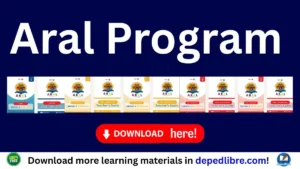
To support our community of educators and parents, we have compiled the latest ARAL Program Implementation Guidelines, Reading Modules, and Assessment Toolkits.
Important Note: You can download the file free of charge. These resources are designed to help you implement the ARAL framework at home or in your local learning centers.
Click the links below to Download the ARAL Program Resources!
Download the Official ARAL Program Materials (Free)
One of the most unique aspects of the ARAL Program is its multi-sectoral tutoring approach. It doesn’t just rely on regular classroom teachers; it mobilizes a literal army of educators.
Tutor-to-Student Ratio: Ideally 1:5 for highly targeted support, but can go up to 1:15 in larger groups.
Who are the Tutors?
Public school teachers (with proper compensation/incentives).
Para-teachers and pre-service teachers (Education students).
Licensed professionals and college graduates from the community.
Modality: Sessions are held face-to-face, online, or in a blended format, depending on the school’s resources and the student’s location.
Disclaimer:
Some educational materials may be inspired by or aligned with DepEd curriculum standards. However:
All materials uploaded or created are intended to support teachers and students.
If any copyrighted content is unintentionally shared, please contact us here depedlibre@gmail.com immediately for removal or proper attribution.
We respect intellectual property rights and respond promptly to valid copyright concerns.
The Role of Parents and the Community
The ARAL Program Act (RA 12028) emphasizes that recovery doesn’t happen only within school walls. The “Learner-Teacher-Parent” triad is essential.
How Parents Can Help:
Monitor Attendance: Ensure your child attends the scheduled tutorial sessions.
Create a Reading Nook: Dedicate 15–30 minutes a day for “ARAL Time” at home.
Engage with Teachers: Ask for the results of the MOSY assessments to see where your child has improved.
Frequently Asked Questions
1. Is the ARAL Program mandatory for all students?
No. It is specifically for students who fall below the expected proficiency levels in Reading, Math, and Science. However, all students are assessed to determine their eligibility.
2. Is there a fee for these tutorials?
Absolutely not. Under the ARAL Program Act, all interventions, materials, and tutoring services are free.
3. Will this add to the workload of our already tired teachers?
The program includes provisions for hiring support aides and external tutors (like college graduates) to reduce the burden on regular teachers. Additionally, teachers who participate as tutors are entitled to incentives as per DepEd guidelines.
4. What happens if my school doesn’t have the ARAL program yet?
Implementation is being rolled out in phases. If your school has not yet started, you can contact your Schools Division Office (SDO) or use the free downloadable materials to start home-based interventions.
Don’t forget to Follow our Facebook page for more free learning materials!